
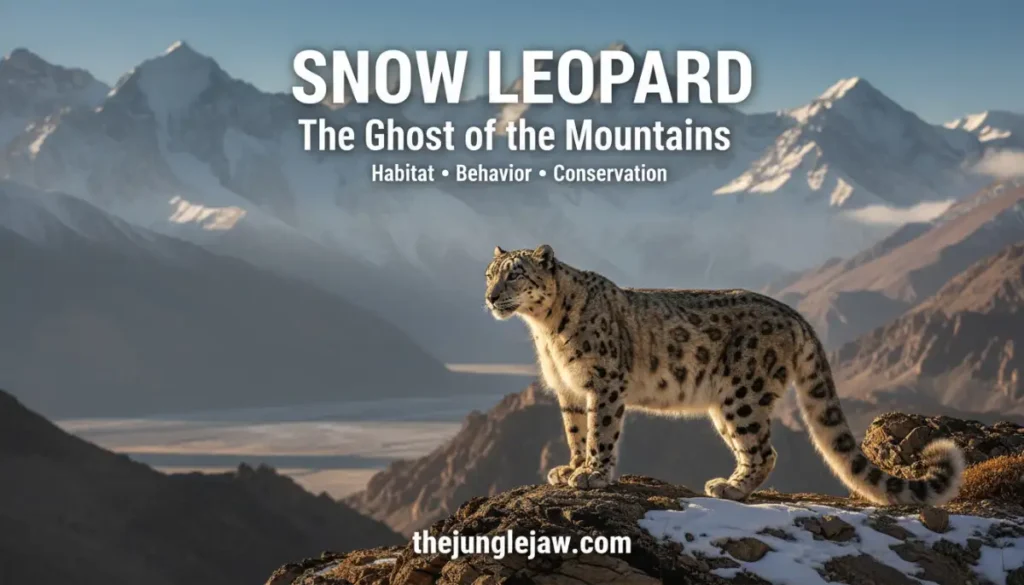
The Shadow That Almost Nobody Sees
Imagine standing on a frozen mountain ridge at over 4,000 metres above sea level. The wind bites at your face, prayer flags flutter in the distance, and the landscape seems almost lifeless.
Then someone points to a rocky cliff hundreds of metres away.
At first, you see nothing.
Suddenly, the rocks move.
A Snow Leopard steps into view, blending so perfectly with the mountains that it seems to appear out of thin air.
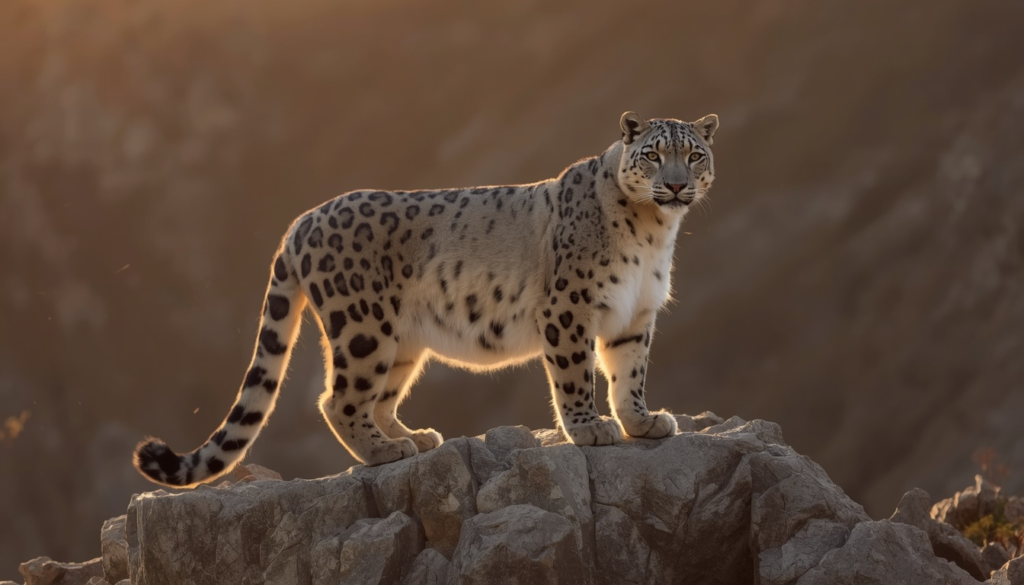
This is why the Snow Leopard is often called the “Ghost of the Mountains.” It is one of the world’s most elusive big cats and one of the most exciting animals a wildlife enthusiast can hope to see in India.
Table of Contents
Why the Snow Leopard Matters
For many wildlife lovers, seeing a Snow Leopard is the ultimate wildlife experience.
Unlike tigers, lions or leopards that live in forests and grasslands, Snow Leopards survive in some of the harshest environments on Earth. They inhabit remote mountain regions where temperatures can drop far below freezing and oxygen levels are significantly lower than at sea level.
The Snow Leopard is also an important indicator of mountain ecosystem health. If Snow Leopards are thriving, it usually means their prey species, grasslands and mountain habitats are healthy too.
For India, the species is particularly special because the country’s northern Himalayas support one of the world’s most important Snow Leopard populations.
Protecting Snow Leopards also protects entire high-altitude ecosystems that provide water and ecological stability for millions of people.
Key Facts: Snow Leopard
| Fact | Details |
|---|---|
| Common Name | Snow Leopard |
| Scientific Name | Panthera uncia |
| IUCN Status | Vulnerable |
| Average Weight | 25–55 kg |
| Length | Up to 2.1 metres including tail |
| Lifespan | 10–15 years in the wild |
| Diet | Bharal (Blue Sheep), Ibex, Marmots, Hares and other mountain animals |
| Range | Himalayas and Central Asia |
| Indian Range | Ladakh, Himachal Pradesh, Uttarakhand, Sikkim and Arunachal Pradesh |
| Nickname | Ghost of the Mountains |
What Makes the Snow Leopard Special?
One of the first questions people ask is:
Is a Snow Leopard simply a white leopard?
The answer is no.
Snow Leopards are a completely different species specially adapted to life in cold mountain environments.
Everything about their body helps them survive.
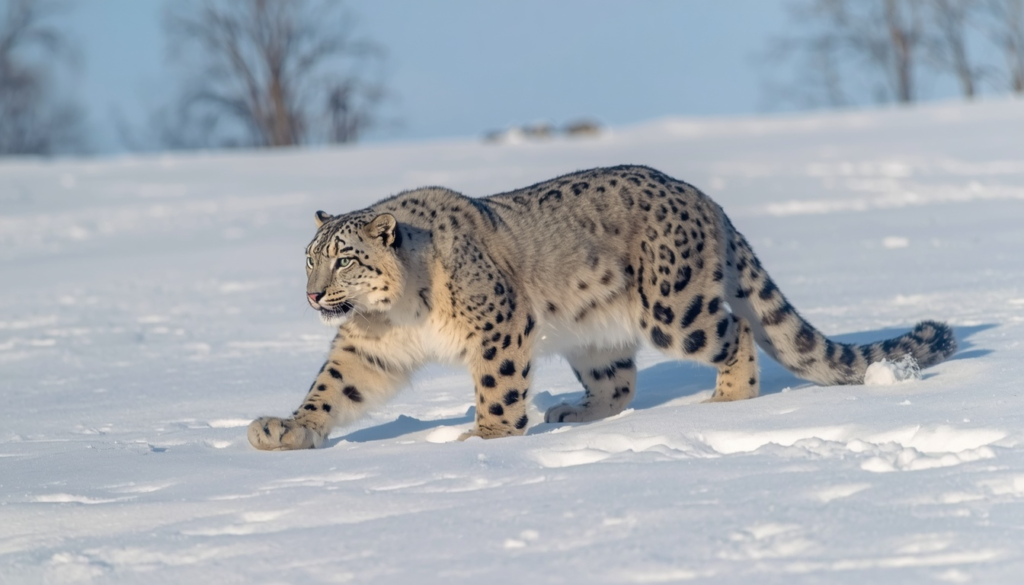
Their thick smoky-grey fur acts like a natural winter coat. Their broad paws function like snowshoes, helping them walk across snow without sinking deeply. Their long tail provides balance while climbing steep cliffs and can even be wrapped around the face for warmth during freezing nights.
Their small rounded ears help reduce heat loss, while enlarged nasal passages warm icy air before it reaches the lungs.
These adaptations allow Snow Leopards to survive where few other large predators can.
Snow Leopard Behaviour: How Does the Ghost of the Mountains Live?
One reason Snow Leopards are rarely seen is their behaviour.
Unlike lions, they do not live in groups.
Unlike many tigers, they rarely use obvious trails.
Instead, Snow Leopards spend much of their lives alone.
They patrol enormous territories across rugged mountain terrain, often moving along ridgelines, cliff edges and rocky outcrops.
Most activity occurs during dawn and dusk. Wildlife biologists call these periods “crepuscular” hours, meaning the animal is most active around sunrise and sunset.
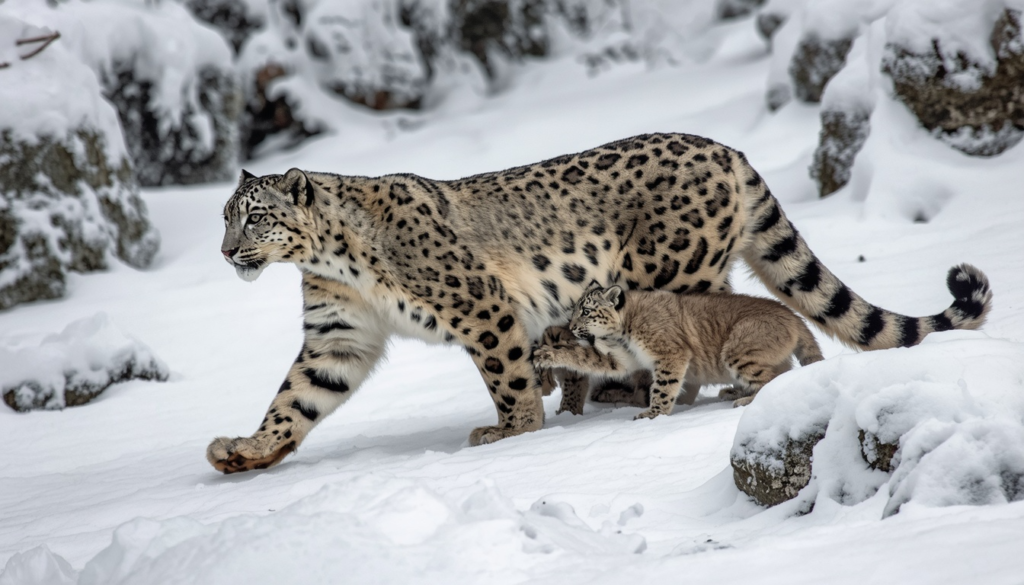
Snow Leopards communicate using scent markings, scratches and vocalisations.
Interestingly, they cannot roar like lions and tigers. Instead, they produce sounds such as growls, hisses, yowls and a unique chuffing call.
For first-time wildlife enthusiasts, this often comes as a surprise.
The world’s most famous mountain cat is also one of the quietest.
Snow Leopard Habitat: Life at the Top of the World
Snow Leopards occupy some of the most spectacular landscapes on Earth.
In India, they are primarily found between 3,000 and 5,500 metres above sea level.
These habitats include:
High-Altitude Grasslands
Open mountain slopes provide grazing grounds for wild sheep and goats that form the Snow Leopard’s primary prey.
Rocky Cliffs and Escarpments
These areas offer ideal hunting opportunities and safe resting locations.
Cold Desert Landscapes
Ladakh’s barren valleys and dramatic mountains represent some of the world’s best Snow Leopard habitat.
Alpine Meadows
During summer months, Snow Leopards may move through alpine ecosystems rich in wildlife.
Unlike forest predators that depend on dense vegetation for cover, Snow Leopards rely on terrain.
Their camouflage allows them to disappear into rocky mountainsides almost instantly.
Even experienced trackers often struggle to spot them.
How Does a Snow Leopard Hunt?
Another common question among beginners is:
What does a Snow Leopard eat?
The answer depends on where it lives.
Its favourite prey includes:
- Bharal (Blue Sheep)
- Himalayan Ibex
- Argali Sheep
- Marmots
- Pikas
- Hares
Snow Leopards are ambush predators.
They use elevation to their advantage, often approaching prey from above.
When the moment is right, they launch powerful downhill attacks, sometimes covering astonishing distances in a single leap.
Scientists estimate they can leap more than 10 metres in one bound.
That is longer than many cars.
Because prey can be scarce in mountain ecosystems, Snow Leopards often remain with a successful kill for several days.
This helps maximise the energy gained from each hunt.
Threats Facing Snow Leopards Today
Although Snow Leopards inhabit remote regions, they are not free from danger.
Human-Wildlife Conflict
Livestock occasionally becomes prey when natural prey populations decline.
This can create tension between local communities and predators.
Habitat Degradation
Overgrazing, infrastructure projects and changing land use can reduce habitat quality.
Climate Change
Many scientists consider climate change one of the biggest long-term threats.
As temperatures rise, vegetation zones shift higher up mountains, potentially affecting both prey species and Snow Leopard habitat.
Illegal Wildlife Trade
Although poaching is less common than in some other big cat species, illegal trade remains a concern.
Declining Wild Prey
When populations of bharal and ibex decrease, Snow Leopards may struggle to find enough food.
Protecting prey species is therefore just as important as protecting the predator itself.
Conservation Status: Protecting India’s Mountain Predator
The Snow Leopard is currently classified as Vulnerable by the IUCN.
Fortunately, significant conservation work is underway.
Project Snow Leopard
India launched Project Snow Leopard to improve conservation across high-altitude landscapes.
Unlike traditional protected-area approaches, the programme focuses on both wildlife and local communities.
Community Conservation
Many villages now participate in conservation initiatives that reduce livestock losses and support eco-tourism.
Camera Trap Monitoring
Researchers use camera traps to study Snow Leopard populations without disturbing them.
These cameras have revealed fascinating insights into behaviour and distribution.
Scientific Research
GPS collars, genetic analysis and population surveys continue to improve understanding of the species.
Eco-Tourism Benefits
Responsible wildlife tourism has created economic incentives for local communities to protect Snow Leopards.
In many regions, the species has become more valuable alive than any short-term alternative land use.
Where to See Snow Leopards in India
For wildlife enthusiasts dreaming of a Snow Leopard encounter, these are the best places to visit.
1. Hemis National Park, Ladakh
Widely regarded as the world’s premier Snow Leopard destination.
Winter expeditions here offer some of the best chances anywhere on Earth.
2. Ulley Valley, Ladakh
A famous Snow Leopard tracking area known for consistent sightings.
3. Rumbak Valley, Ladakh
One of India’s most celebrated wildlife trekking destinations.
4. Spiti Valley, Himachal Pradesh
Offers growing opportunities for Snow Leopard observation and photography.
5. Kibber Wildlife Sanctuary, Himachal Pradesh
Known for rugged mountain scenery and healthy Snow Leopard habitat.
Patience is essential.
Even in the best locations, spotting a Snow Leopard remains a rare and memorable achievement.
Frequently Asked Questions About Snow Leopards
Are Snow Leopards found only in India?
No. They occur across 12 countries in Asia, although India supports an important portion of the global population.
Why are Snow Leopards called Ghosts of the Mountains?
Because they are extremely difficult to spot and blend perfectly into rocky mountain habitats.
Can Snow Leopards roar?
No. Unlike lions and tigers, Snow Leopards cannot produce a true roar.
Is it dangerous to see a Snow Leopard in the wild?
Snow Leopards are generally shy and avoid humans whenever possible.
What is the best time to see a Snow Leopard?
Winter, particularly between January and March, offers the highest chance of sightings in Ladakh.
Why the Ghost of the Mountains Needs Our Help
The Snow Leopard is more than just a rare big cat.
It is a symbol of the wild Himalayas, a guardian of mountain ecosystems and a reminder that some of nature’s greatest wonders still exist beyond the reach of roads and cities.
Every successful conservation project, every responsible wildlife trip and every conversation about protecting mountain habitats helps secure its future.
If this article inspired you, consider supporting responsible Himalayan tourism, learning more about high-altitude conservation, and sharing the story of the Snow Leopard with fellow wildlife enthusiasts.
Because the future of the Ghost of the Mountains depends on how much we value the wild places it calls home.