
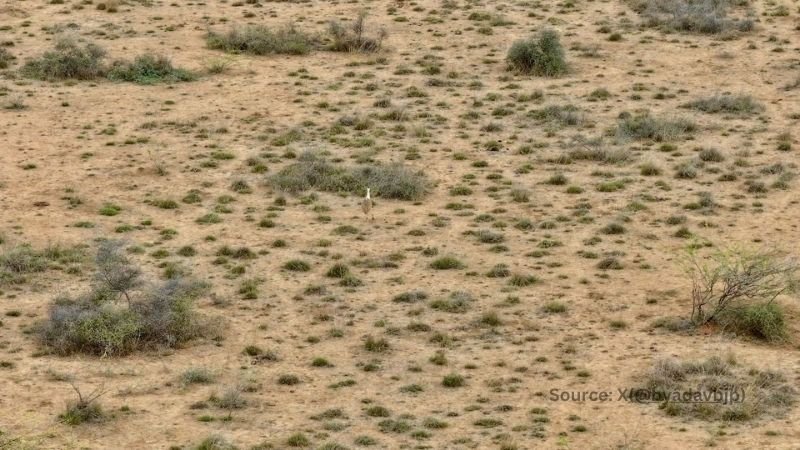
Have you ever heard of a 19-hour road trip to save a single life? In the vast grasslands of Kutch, Gujarat, a tiny bird just made history. For the first time in an entire decade, a Great Indian Bustard (GIB) chick has hatched in the wild.
But this wasn’t just nature taking its course. It was a high-stakes “spy mission” involving scientists, a hand-held incubator, and a very special foster mother.
The “Jump-Start” Strategy: How Scientists Beat the Odds
In Gujarat, the GIB was facing a heartbreaking end. With only four females left and zero males, the species was hitting a dead end. The females would lay eggs, but they were “duds” (infertile) that could never hatch.
That’s where the Jump-Start approach changed everything. Think of it as a nature-led “reboot”:
- The Problem: In the wild, GIB eggs are often eaten by predators like foxes or dogs before they can hatch.
- The Swap: Scientists found a wild female in Kutch sitting on an infertile egg.
- The Solution: They carefully replaced her egg with a fertile, captive-bred egg brought all the way from a breeding center in Rajasthan.
- The Success: The mother bird accepted the “gift,” kept it warm, and on March 26, the chick finally emerged!
Why this is genius: By hatching in the wild under a real bird, the chick learns “street smarts” immediately. It knows where to find the best grasshoppers and how to stay silent when a predator is near—things a bird in a cage might never master.
A Non-Stop Dash Across the Desert
Moving a bird egg isn’t like moving a carton of groceries. It’s more like transporting a delicate, living diamond.
The egg traveled 770 kilometers from Sam, Rajasthan, to Naliya, Gujarat. To keep the temperature perfect, a team member held a portable incubator by hand for 19 hours. They drove through a “halt-free corridor”—no long breaks, no delays—just a straight shot to save a species.
📊 High-Quality Conservation: The Numbers Behind the Success
To understand why this is a massive win, we have to look at the data. Saving a species isn’t just about heart; it’s about precision.
| Metric | The Impact |
| Project GIB Milestone | Envisioned in 2011; Launched in 2016. |
| Current Breeding Success | 73 birds now safe in Rajasthan conservation centers. |
| New Life | 5 new chicks added this season alone. |
| The Habitat Scope | 2,000 sq. km of Kutch grasslands being monitored. |
| The “Gibi” Legacy | 13th COP mascot (2020) finally seeing a wild comeback. |
Why Kutch is the “VIP Lounge” for Rare Birds
The Kutch GIB Sanctuary is a legendary landscape. It is actually one of the only places on the planet where you can spot three different “bustard” cousins in the same region during different seasons:
- The Great Indian Bustard (GIB): The giant of the grasslands.
- The Asian Houbara: A mysterious, camouflaged traveler.
- The Lesser Florican: Famous for its incredible jumping displays.
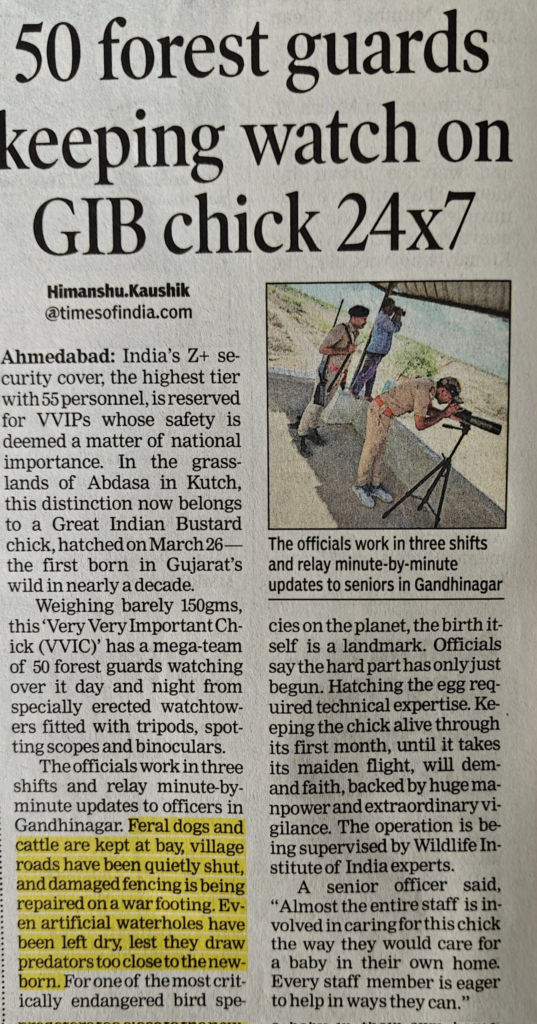
Is This the Turning Point for “Gibi”?
Union Minister Bhupender Yadav and the dedicated teams in Rajasthan and Gujarat have proven that when humans use technology to support nature, miracles happen.
What do you think? Is a 19-hour “egg ambulance” worth the effort? When you see that tiny chick chirping in the Kutch wind, the answer is a clear “Yes!”