
A Shadow in the Sal Forest
The forest falls silent long before you see it.
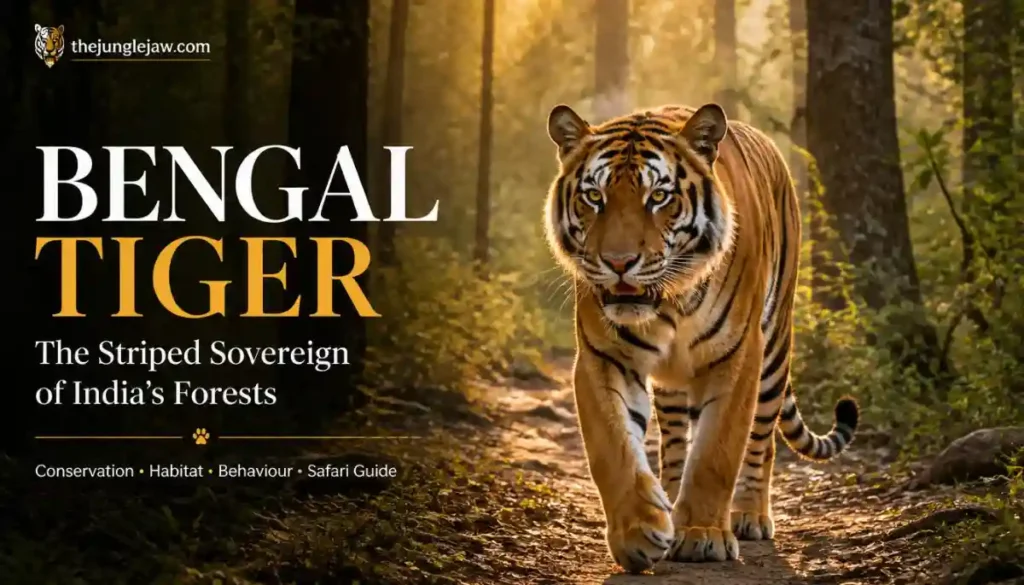
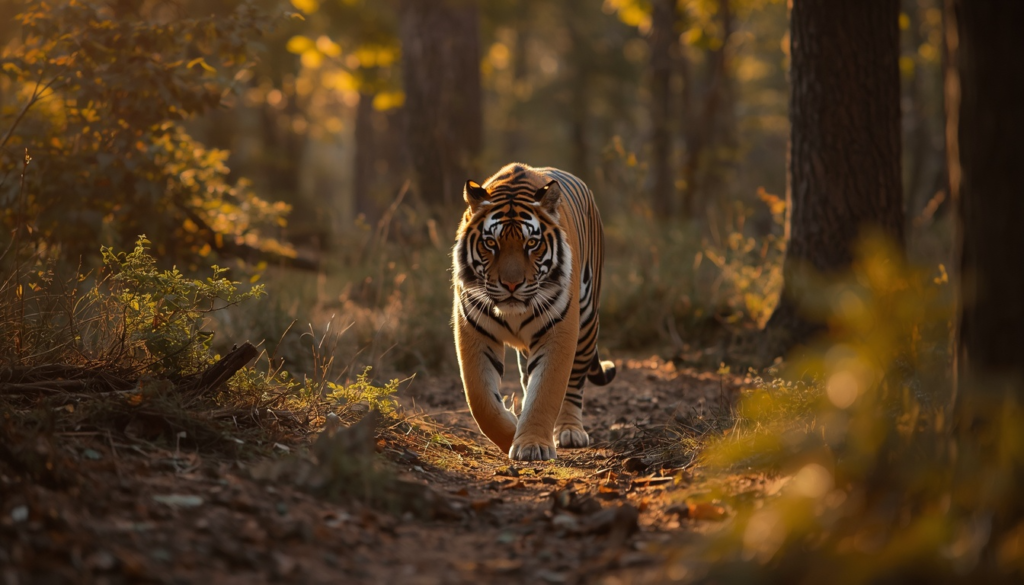
A langur’s alarm call rings through the morning mist. Chital deer freeze, ears twitching nervously. Somewhere beyond the curtain of teak and sal, a powerful presence moves with astonishing stealth. Then, for a fleeting moment, orange and black stripes emerge from the shadows. The Bengal Tiger appears—calm, confident and utterly commanding.
For many wildlife enthusiasts, spotting a tiger in the wild is the ultimate Indian safari experience. Yet behind every breathtaking sighting lies a much bigger story: one of survival, conservation battles, political will, habitat protection and the ongoing struggle to ensure that India’s national animal continues to roam free.
Why the Bengal Tiger Matters
Few animals symbolise India’s natural heritage as powerfully as the Bengal Tiger.
From ancient folklore and royal insignia to modern conservation campaigns, the tiger occupies a unique place in the country’s cultural and ecological identity. It is more than just a charismatic predator. It is an umbrella species, meaning that protecting tiger habitat safeguards thousands of other plants and animals sharing the same ecosystem.
Healthy tiger populations are also indicators of healthy forests. And healthy forests provide clean water, climate resilience, carbon storage and livelihoods for millions of people.
In many ways, the future of India’s wilderness is deeply connected to the future of the Bengal Tiger.
Key Facts: Bengal Tiger
| Fact | Details |
|---|---|
| Common Name | Bengal Tiger |
| Scientific Name | Panthera tigris tigris |
| IUCN Status | Endangered |
| Average Weight | Males: 180–260 kg; Females: 100–160 kg |
| Length | Up to 3 metres including tail |
| Lifespan | 10–15 years in the wild |
| Diet | Deer, wild boar, gaur, buffalo and other large mammals |
| Range | India, Bangladesh, Nepal and Bhutan |
| Top Speed | Around 50–60 km/h over short distances |
| Population | India holds the majority of the world’s wild tiger population |
Built for Power: The Biology of a Perfect Predator
The Bengal Tiger is among the largest cat species on Earth and the biggest wild cat found in India.
Every part of its body is designed for hunting. Powerful shoulders help it drag prey heavier than itself. Massive canine teeth can puncture thick hide and muscle. Padded paws allow it to move almost silently through dense vegetation.
The tiger’s famous striped coat serves as highly effective camouflage. While the bright orange colour may seem conspicuous to human eyes, deer and other prey species perceive colours differently. In filtered forest light, the stripes blend seamlessly with grass, shadows and tree trunks.
A mature male may occupy a territory spanning hundreds of square kilometres, depending on habitat quality and prey availability. Females usually maintain smaller territories centred around areas suitable for raising cubs.
Despite their size, Bengal Tigers are remarkably agile swimmers and frequently cross rivers, lakes and wetlands in search of prey or new territory.
Masters of Stealth: Behaviour and Hunting Strategies
Unlike lions, Bengal Tigers are largely solitary animals.
Each tiger maintains and defends its territory through scent marking, scratching trees and vocalisations. Encounters between adults are usually brief unless they are mating or a mother is caring for cubs.
The tiger’s hunting strategy relies on patience rather than speed.
A tiger may spend hours stalking prey through tall grass or forest undergrowth, carefully using wind direction and cover to avoid detection. Once close enough, it launches an explosive ambush, often covering the final distance in just a few powerful leaps.
Success is far from guaranteed. Most hunts fail.
This reality highlights just how challenging life can be even for an apex predator. A single missed opportunity can mean days without a substantial meal.
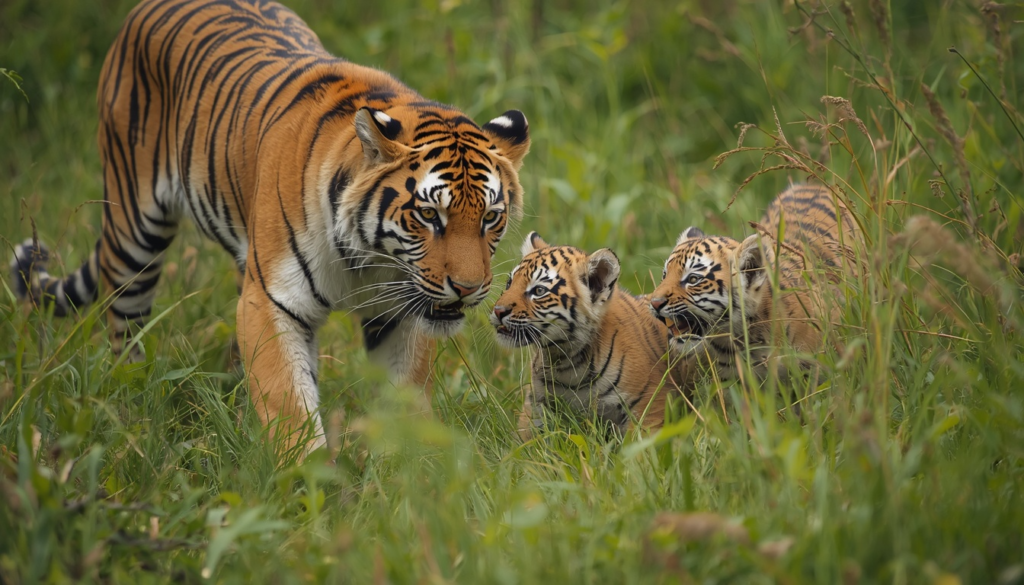
Mothers face an even greater challenge. Tiger cub mortality remains high, and females must hunt regularly while protecting vulnerable young from threats including other predators, disease and even rival male tigers.
Bengal Tiger Habitat: From Mangroves to Mountain Foothills
One reason the Bengal Tiger is so fascinating is its remarkable adaptability.
Across the Indian subcontinent, tigers occupy an extraordinary range of habitats.
Tropical Forests
Dense forests in central India provide ideal cover and abundant prey. These landscapes represent some of the country’s strongest tiger populations.
Grasslands
Open grasslands support large herbivore populations, creating excellent hunting opportunities.
Mangrove Ecosystems
The famed Sundarbans present one of the world’s most unique tiger habitats. Here, tigers navigate tidal channels, swim regularly and survive in a challenging landscape shaped by saltwater and shifting islands.
Himalayan Foothills
Tiger populations also occur in the Terai Arc landscape, where riverine forests and grasslands stretch along the Himalayan foothills.
This ecological flexibility has helped the species persist across diverse environments, but it does not make them immune to habitat loss.
The Biggest Threats Facing Bengal Tigers Today
The story of the Bengal Tiger is one of both hope and caution.
India’s tiger numbers have increased significantly over recent decades, yet the species continues to face serious challenges.
Habitat Fragmentation
As roads, railways, mining projects and urban expansion spread into wildlife landscapes, forests become fragmented.
Tigers require large territories and connectivity between habitats. When corridors disappear, populations become isolated, increasing the risk of inbreeding and human-wildlife conflict.
Human-Tiger Conflict
As people and tigers share increasingly crowded landscapes, encounters become more common.
Livestock predation can create economic hardship for local communities. In some cases, retaliatory killings occur, threatening already vulnerable populations.
Poaching
Illegal wildlife trade remains a major concern.
Tiger skins, bones and other body parts continue to attract demand in black markets despite international bans and strengthened enforcement efforts.
Climate Change
Perhaps the most overlooked threat is climate change.
The Sundarbans, home to one of the world’s most distinctive tiger populations, faces rising sea levels, stronger cyclones and habitat loss. These pressures could significantly affect both wildlife and local communities in coming decades.
Conservation Status: A Story of Progress and Persistence
The Bengal Tiger is currently classified as Endangered on the IUCN Red List.
Yet unlike many global conservation stories dominated by decline, India’s tiger conservation programme offers genuine reasons for optimism.
Project Tiger
Launched in 1973, Project Tiger transformed wildlife conservation in India.
At a time when tiger populations had fallen dramatically, the programme established protected reserves, strengthened habitat protection and improved anti-poaching measures.
Today, India has more than 50 tiger reserves spread across diverse landscapes.
Technology in Conservation
Modern conservation efforts increasingly rely on technology.
Camera traps, satellite mapping, genetic studies and digital monitoring systems allow researchers and forest departments to track tiger populations with unprecedented accuracy.
Community Participation
Conservation success ultimately depends on local communities.
Compensation schemes for livestock losses, eco-tourism opportunities and community engagement programmes have helped build support for tiger protection in many landscapes.
Challenges Remain
Despite notable successes, conservation is far from complete.
Some reserves face overcrowding as tiger numbers increase. Connectivity between protected areas remains a pressing concern. Human population growth continues to place pressure on forests across the country.
Protecting tigers now requires landscape-level planning rather than focusing solely on protected reserves.
Where to See the Bengal Tiger in India
For wildlife lovers hoping to encounter a Bengal Tiger in its natural habitat, India offers some of the world’s finest safari destinations.
1. Ranthambore National Park, Rajasthan
Perhaps India’s most famous tiger destination, Ranthambore combines dramatic fort ruins, lakes and dry deciduous forest. Tigers here are often visible during daylight hours, making it popular among photographers.
2. Bandhavgarh National Park, Madhya Pradesh
Known for its relatively high tiger density, Bandhavgarh consistently ranks among the country’s best locations for sightings.
3. Kanha National Park, Madhya Pradesh
One of India’s most beautiful protected areas, Kanha features expansive meadows, dense forests and thriving tiger populations.
4. Corbett National Park, Uttarakhand
India’s oldest national park offers a more rugged safari experience within the Terai ecosystem. Sightings can be challenging but immensely rewarding.
5. Tadoba-Andhari Tiger Reserve, Maharashtra
Tadoba has emerged as one of India’s premier tiger destinations, with excellent opportunities to observe tigers exhibiting natural behaviour.
The Tiger’s Future Depends on Us
Every tiger sighting represents something extraordinary.
It means a forest survived. It means prey populations remain healthy. It means rangers, researchers, local communities and conservationists succeeded in protecting a landscape against immense pressure.
The Bengal Tiger’s story is one of resilience, but resilience has limits.
Responsible wildlife tourism, support for conservation organisations, respect for protected areas and informed public engagement all play a role in securing the species’ future. Every visitor who chooses ethical safari practices contributes to the value of keeping forests wild.
The next time you hear a distant alarm call echo through an Indian forest, remember that somewhere nearby, a Bengal Tiger may be moving silently through the shadows—a living symbol of the wild India we still have the chance to protect.