
The Forest Trembles Before You See It
You hear the crack of a branch.
Then another.
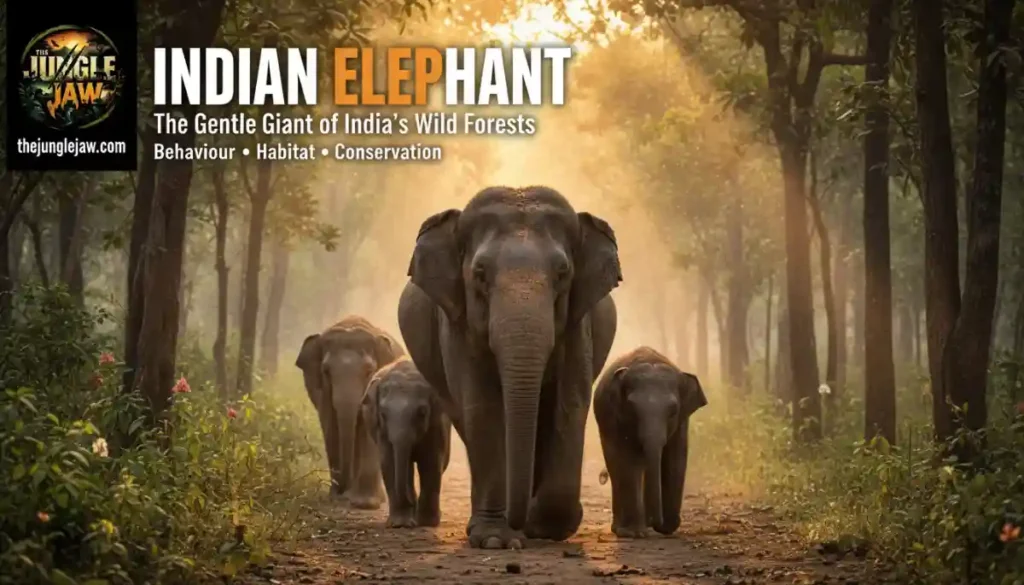
The forest seems to come alive as birds scatter from the trees and a deep rumble echoes through the morning mist. Moments later, a massive grey figure emerges from the shadows, followed by several smaller elephants walking closely behind.
It’s a sight that stops most wildlife lovers in their tracks.
The Indian Elephant is not only the largest land animal in Asia but also one of the most intelligent and emotionally complex creatures on Earth. Seeing one in the wild is often a life-changing experience.
Table of Contents
Why the Indian Elephant Matters
Few animals are as deeply woven into India’s culture, history and natural heritage as the Indian Elephant.
From ancient temples and folklore to modern conservation campaigns, elephants have shared a special relationship with people for thousands of years.
But beyond their cultural importance, Indian Elephants play a critical ecological role. They are often called ecosystem engineers, meaning they physically shape the environment around them.
As elephants move through forests, they create pathways, disperse seeds, open up vegetation and help maintain healthy ecosystems that support countless other species.
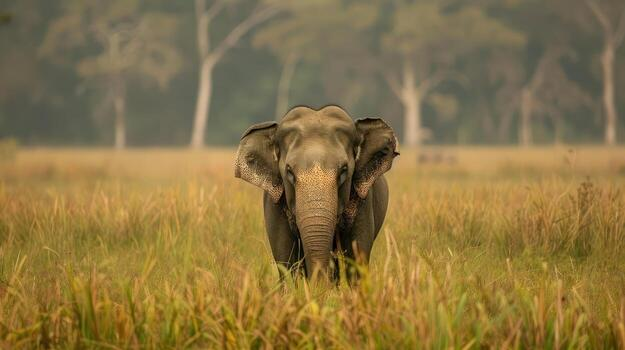
Protecting elephants means protecting entire landscapes.
Key Facts: Indian Elephant
| Fact | Details |
|---|---|
| Common Name | Indian Elephant |
| Scientific Name | Elephas maximus indicus |
| IUCN Status | Endangered |
| Average Weight | 3,000–5,500 kg |
| Shoulder Height | Up to 3.2 metres |
| Lifespan | 50–70 years |
| Diet | Grasses, leaves, bark, fruits and roots |
| Range | India, Nepal, Bhutan, Bangladesh and Southeast Asia |
| Daily Food Intake | Up to 150 kg of vegetation |
| Daily Water Intake | Up to 200 litres |
What Makes the Indian Elephant So Special?
One of the most common questions beginners ask is:
What’s the difference between Indian and African elephants?
Indian Elephants are generally smaller than African elephants and have smaller ears. Their backs are more rounded, and only some males develop large tusks.
Perhaps even more impressive is their intelligence.
Studies have shown that elephants can recognise themselves in mirrors, remember locations for years and display behaviours that suggest empathy, cooperation and grief.
Their trunk alone contains more than 40,000 muscles.
It can uproot a tree, lift a log or carefully pick up a single blade of grass.
Very few animals possess such extraordinary versatility.
Indian Elephant Behaviour: Understanding the Herd
Indian Elephants are highly social animals.
Most herds are led by an experienced female known as the matriarch.
A matriarch is the senior female who guides the group, remembers migration routes and helps protect younger members.
A typical herd consists of related females and their calves.
Adult males usually leave the herd as they grow older and often live alone or form temporary bachelor groups.
Communication is one of the most fascinating aspects of elephant behaviour.
Elephants use:
- Trumpets
- Rumbles
- Touch
- Body language
- Low-frequency sounds called infrasound
Infrasound travels over long distances and allows elephants to communicate with other herds kilometres away.
Scientists are still discovering new aspects of this remarkable communication system.
Indian Elephant Habitat: Where Do They Live?
Indian Elephants occupy an incredible variety of habitats.
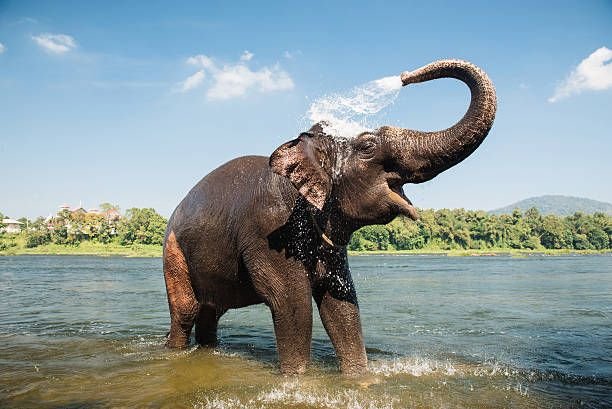
They require three things above all else:
- Food
- Water
- Space
Because of their enormous size and appetite, elephants need large landscapes to survive.
Tropical Forests
Dense forests in southern and northeastern India support some of the country’s largest elephant populations.
Grasslands
Open grasslands provide abundant food resources.
River Valleys
Water sources are essential for drinking, bathing and cooling down.
Forest Corridors
Elephants frequently move between habitats using wildlife corridors.
A corridor is a natural route that connects two larger habitats and allows animals to travel safely.
Protecting these corridors is one of the biggest priorities in elephant conservation today.
What Do Indian Elephants Eat?
Another common question is:
How much food does an elephant need?
The answer is astonishing.
An adult elephant can consume up to 150 kilograms of vegetation every day.
Their diet includes:
- Grass
- Bamboo
- Leaves
- Fruits
- Bark
- Roots
- Shrubs
Because elephants eat so much, they spend a large portion of their day feeding.
As they travel, they spread seeds through their dung, helping forests regenerate naturally.
This is one reason they are considered a keystone species—a species whose presence benefits many others in the ecosystem.
Threats Facing Indian Elephants Today
Despite their size and strength, elephants face serious challenges.
Habitat Loss
Growing human populations and expanding infrastructure have reduced many traditional elephant habitats.
Human-Elephant Conflict
As forests shrink, elephants increasingly enter agricultural areas.
Crop damage can create tension between people and wildlife.
Railway and Road Accidents
Elephants crossing transport routes face collision risks.
Fragmented Landscapes
When habitats become isolated, elephant movement becomes more difficult.
Illegal Poaching
Although poaching has declined in many areas, illegal killing for ivory remains a concern.
Conservationists emphasise that protecting habitat is often more important than protecting individual animals alone.
Conservation Status: How India Is Protecting Its Elephants
The Indian Elephant is classified as Endangered by the IUCN.
Fortunately, India has become a global leader in elephant conservation.
Project Elephant
Launched in 1992, Project Elephant focuses on habitat protection, research and conflict mitigation.
Elephant Reserves
India has established numerous elephant reserves across key landscapes.
Wildlife Corridors
Protecting migration routes helps maintain healthy populations.
Technology and Monitoring
GPS collars, drones and camera traps help researchers understand elephant movement patterns.
Community Participation
Local communities play a crucial role in conservation success.
Many programmes now focus on coexistence strategies that benefit both people and wildlife.
Where to See Indian Elephants in India
For wildlife enthusiasts hoping to observe elephants in their natural habitat, these destinations offer exceptional opportunities.
1. Nagarhole National Park, Karnataka
One of India’s finest elephant destinations with large herds often seen near water bodies.
2. Bandipur National Park, Karnataka
Part of the Nilgiri Biosphere Reserve and home to a thriving elephant population.
3. Periyar Tiger Reserve, Kerala
Famous for elephants gathering around the scenic Periyar Lake.
4. Kaziranga National Park, Assam
Offers excellent elephant sightings alongside rhinos, wild buffalo and other wildlife.
5. Jim Corbett National Park, Uttarakhand
Supports healthy elephant populations within the Terai ecosystem.
Early mornings and late afternoons usually provide the best viewing opportunities.
Frequently Asked Questions About Indian Elephants
Are Indian Elephants dangerous?
Most elephants avoid conflict, but wild elephants should always be treated with respect and given plenty of space.
How intelligent are elephants?
They are among the most intelligent animals on Earth and demonstrate advanced memory, problem-solving and social behaviour.
Why do elephants travel long distances?
They move in search of food, water and seasonal resources.
Do all Indian Elephants have tusks?
No. Large tusks are mostly found in males, and some males may have very small tusks or none at all.
What is the best time to see elephants in India?
The dry season often offers the best viewing opportunities because elephants gather around water sources.
The Future of India’s Gentle Giants
The Indian Elephant has walked across the subcontinent for thousands of years.
It has shaped forests, inspired cultures and captured human imagination like few other animals.
Yet its future depends on the choices we make today.
Supporting responsible wildlife tourism, protecting forest corridors and promoting coexistence can help ensure that future generations continue to hear the distant rumble of elephant herds moving through India’s wild landscapes.
Because when elephants thrive, entire ecosystems thrive alongside them.
And that is a future worth protecting.