
Asiatic Lion in Gir: Photographing India’s Last Wild Lions
The Golden King of Gujarat
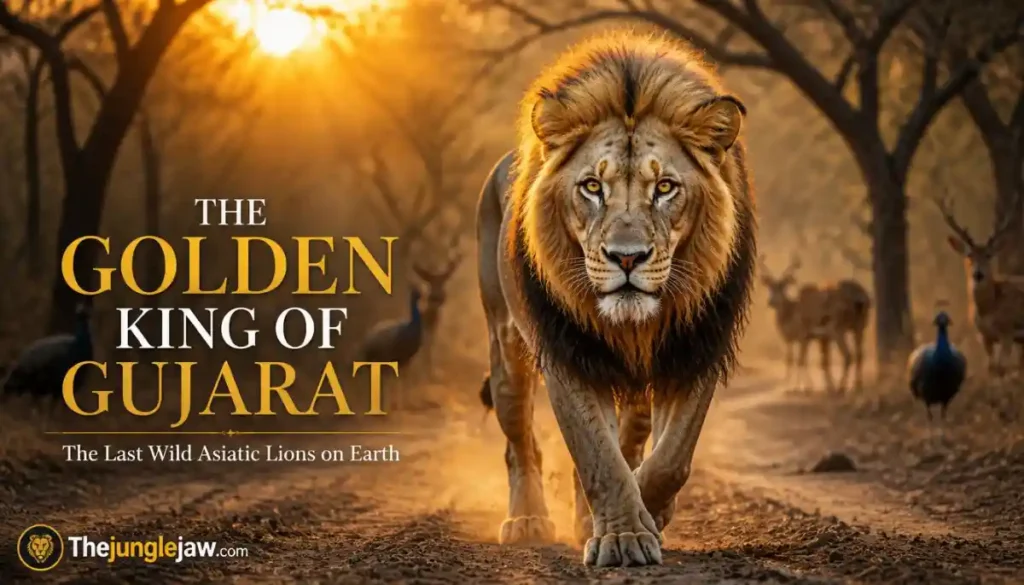
The first rays of sunlight spill across the dusty tracks of Gir as the forest slowly awakens. Peafowl call from acacia branches, chital deer step cautiously into open clearings, and somewhere ahead, a deep rumbling roar rolls across the landscape.
Then you see him.
A mature Asiatic Lion emerges from the scrub, his modest mane glowing amber in the morning light. He pauses for a moment, surveying his kingdom before continuing his unhurried walk through the forest. For wildlife photographers, it is one of India’s most unforgettable sights—a chance to photograph the only wild population of Asiatic Lions left anywhere on Earth.
Unlike Africa’s famous savannah lions, the Asiatic Lion survives in a uniquely Indian landscape. Its story is one of near extinction, remarkable recovery, and an ongoing conservation challenge that remains deeply relevant today.
Why the Asiatic Lion Matters
The Asiatic Lion is not simply another big cat.
It is one of India’s greatest conservation success stories and one of the rarest large carnivores on the planet. A little over a century ago, uncontrolled hunting and habitat loss pushed the species to the brink of extinction. By the early 1900s, only a handful survived in the Gir forests of Gujarat.
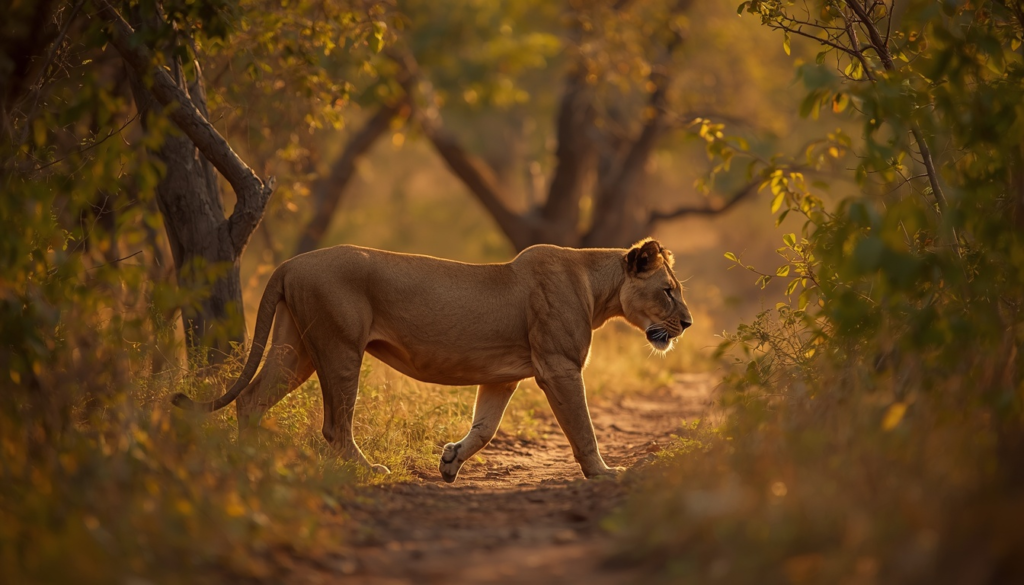
Today, thanks to decades of protection, the population has rebounded significantly.
For wildlife lovers, the lion represents resilience. For photographers, it offers something even more special—the opportunity to document a species found nowhere else in the wild.
Every image captured responsibly becomes part of a larger story about conservation, coexistence, and the value of protecting India’s natural heritage.
Key Facts: Asiatic Lion
| Fact | Details |
|---|---|
| Common Name | Asiatic Lion |
| Scientific Name | Panthera leo persica |
| IUCN Status | Endangered |
| Average Weight | Males: 160–190 kg; Females: 110–120 kg |
| Length | Up to 2.9 metres including tail |
| Lifespan | 12–16 years in the wild |
| Diet | Chital, sambar, nilgai, wild boar, livestock in some areas |
| Range | Gujarat, India |
| Social Structure | Lives in prides, though generally smaller than African lions |
| Population Trend | Increasing due to conservation efforts |
Built for Survival: Understanding the Asiatic Lion
At first glance, the Asiatic Lion may appear similar to its African cousin, but a closer look reveals several differences.
The most obvious feature is the smaller mane. This allows photographers a clearer view of the lion’s ears and facial features, often creating more expressive portraits. Adult males also possess a distinctive fold of skin running along the belly, a characteristic rarely seen in African lions.
Asiatic Lions evolved in dry forests, thorn scrub and savannah-like habitats rather than vast grasslands. Their lighter build and behaviour reflect adaptation to these landscapes.
When photographing lions, pay close attention to facial details. The eyes tell the story. A sharp focus on the eyes can transform an ordinary wildlife photograph into a powerful portrait.
Photography Tip
For close-up portraits:
- Aperture: f/4 to f/6.3
- Shutter Speed: 1/1000 sec minimum
- ISO: Auto ISO with upper limit around 3200
- Focus Mode: Continuous autofocus with animal-eye tracking if available
The goal is to separate the lion from the background while maintaining sharp facial details.
Behaviour: More Social Than Tigers, Yet Distinctly Different
One reason wildlife photographers love lions is their social behaviour.
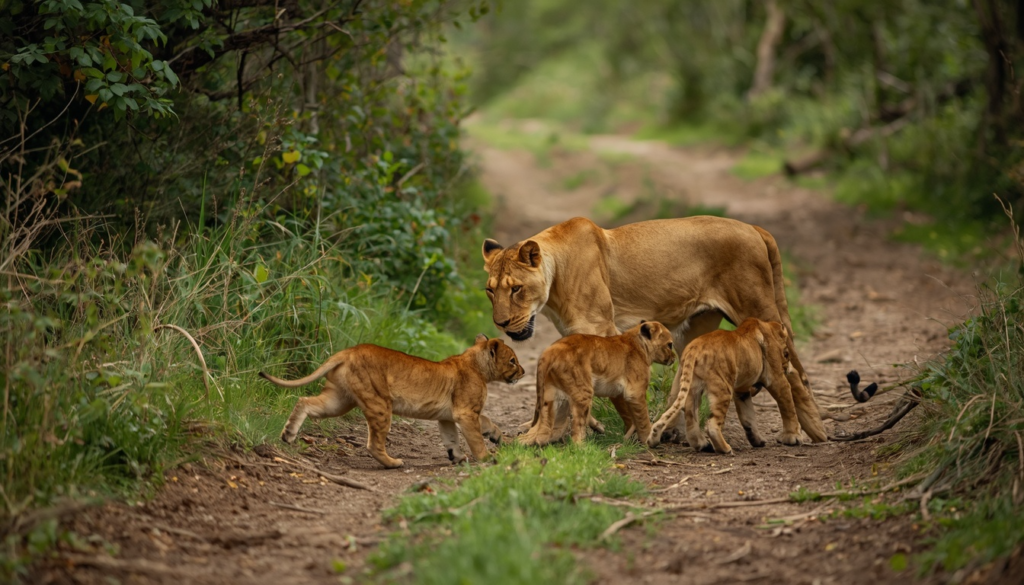
Unlike tigers and leopards, lions live in family groups called prides. While Asiatic Lion prides are generally smaller than those in Africa, they still provide opportunities for unique behavioural photography.
A typical morning in Gir may reveal cubs playing beneath a tree, lionesses resting together in the shade, or males moving between territories.
Patience is essential.
Many first-time visitors focus solely on dramatic action. Experienced photographers know that subtle moments often create stronger images.
A mother gently grooming her cub.
A young lion testing its confidence.
A dominant male scent-marking his territory.
These interactions tell richer stories than a simple record shot.
Photography Tip
Behavioural moments often happen unexpectedly.
Use:
- Burst shooting mode
- Continuous autofocus
- Shutter speed above 1/1600 sec
This ensures you are ready when a lion suddenly yawns, stretches, interacts with cubs or reacts to nearby wildlife.
The Gir Landscape: Habitat of India’s Lions
The story of the Asiatic Lion cannot be separated from Gir.
The Gir landscape is a mosaic of dry deciduous forest, thorn scrub, grasslands and seasonal rivers. During the summer months, the terrain turns golden and dusty, creating dramatic photographic opportunities. The monsoon transforms the region into a lush green wilderness.
Light plays a critical role here.
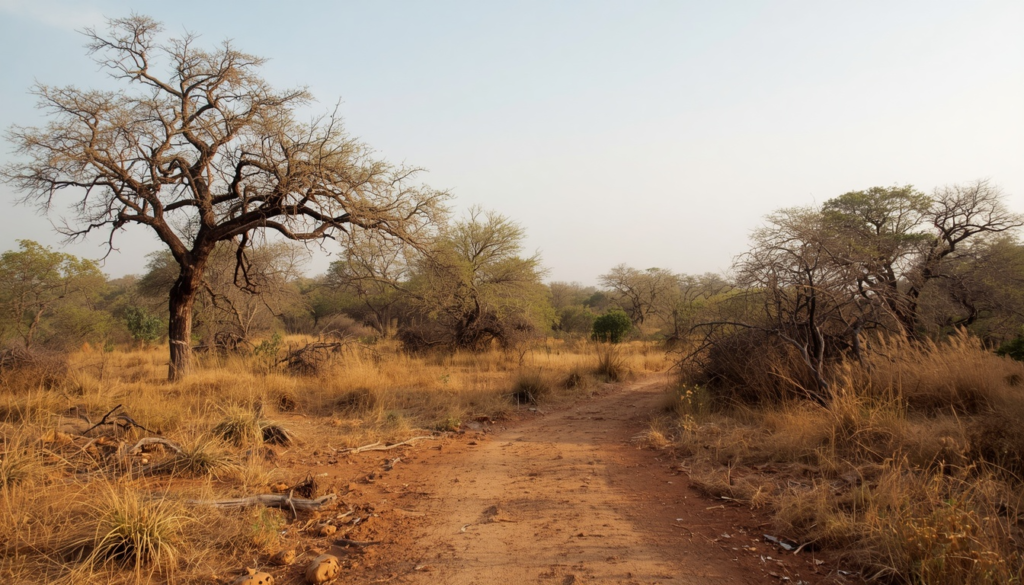
Early morning and late afternoon create the best conditions for photography. Harsh midday sunlight often produces deep shadows and overexposed highlights.
Photography Tip
Golden Hour Settings
- Shoot within the first 90 minutes after sunrise
- Use side-lighting for texture
- Position the sun behind the lion for rim-light effects
- Slightly underexpose to preserve highlights
These techniques help create professional-quality wildlife images with depth and atmosphere.
Photographing Asiatic Lions: Fieldcraft and Composition
Good wildlife photography is not about expensive equipment alone.
It is about observation.
Spend time studying behaviour. Anticipate movement. Understand how lions use the landscape.
Some of the most memorable photographs come from environmental compositions rather than close-up portraits.
Include:
- Acacia trees
- Dust clouds
- Dry riverbeds
- Forest tracks
- Other wildlife species
These elements place the lion within its ecosystem and create a stronger conservation story.
Recommended Equipment
For Safari Photography
- 100–400mm lens
- 150–600mm lens
- Fast telephoto prime lens
- Bean bag for vehicle support
- Extra batteries and memory cards
Composition Techniques
- Use leading lines from safari tracks
- Frame lions with natural vegetation
- Shoot at eye level whenever possible
- Leave space in the direction of movement
- Include habitat context
The best wildlife images capture not only the animal but the environment that sustains it.
Threats Facing the Asiatic Lion
The recovery of the Asiatic Lion is remarkable, but challenges remain.
Unlike many large carnivores spread across multiple regions, nearly the entire wild population exists within a relatively small geographic area.
This concentration creates risks.
Disease Outbreaks
A major disease outbreak could potentially affect a large portion of the population.
Habitat Pressure
Expanding infrastructure and human activity continue to place pressure on wildlife habitats and movement corridors.
Human-Wildlife Conflict
As lion numbers increase, some individuals move outside protected areas into agricultural landscapes and villages.
While coexistence has been relatively successful in Gujarat, conflict remains an ongoing conservation concern.
Road and Railway Mortality
Vehicle collisions and infrastructure development pose additional risks to dispersing lions.
For conservation photographers, documenting these challenges can be just as important as photographing the animals themselves.
Conservation Status: A Remarkable Recovery Story
The Asiatic Lion remains classified as Endangered, but its recovery stands among the world’s most successful carnivore conservation programmes.
Strict legal protection, habitat management, anti-poaching efforts and community involvement have all contributed to population growth.
Forest staff conduct regular monitoring through direct observation, radio telemetry and camera trapping.
Veterinary teams monitor health concerns while conservation planners work to improve habitat connectivity.
Yet one challenge remains particularly important.
Conservationists continue to advocate for establishing additional free-ranging populations outside Gir. Creating a second secure population would reduce the risks associated with keeping almost all wild Asiatic Lions in a single landscape.
The future of the species depends not only on population growth but also on geographic security.
Where to See the Asiatic Lion in India
1. Gir National Park and Wildlife Sanctuary, Gujarat
The world’s most famous destination for Asiatic Lions and the best location for wildlife photography.
2. Gir Interpretation Zone (Devalia Safari Park)
Offers controlled viewing opportunities and excellent chances for photography.
3. Greater Gir Landscape
Many lions now occupy surrounding protected forests and community lands outside the core park.
4. Mitiyala Wildlife Sanctuary
Part of the wider lion landscape and increasingly important for dispersing individuals.
5. Pania Wildlife Sanctuary
A lesser-known area that occasionally offers rewarding sightings away from heavier tourist traffic.
The Future Through the Lens
Every photograph of an Asiatic Lion carries a responsibility.
It is easy to focus on the beauty of the animal. The real story, however, is bigger than any single image. It is a story about habitat protection, local communities, dedicated forest staff and decades of conservation effort.
The next time you visit Gir, slow down.
Watch the changing light. Listen to the alarm calls. Pay attention to the landscape around the lion.
Because the most powerful wildlife photographs are not just portraits of animals. They are visual reminders of why wild places matter.
If this story inspired you, share it with fellow wildlife enthusiasts, support responsible eco-tourism, and explore more conservation stories on The Jungle Jaw.