
Tigers are among the most awe-inspiring creatures in the animal kingdom, revered for their incredible strength, agility, and stealth. As apex predators, tigers are uniquely equipped with a series of remarkable tiger adaptations that not only enhance their ability to hunt but also ensure their dominance in the food chain. Their bodies are designed with these incredible adaptations, which help them survive and thrive in the wild. From their powerful muscles to their razor-sharp senses, every aspect of their body is an adaptation for survival. Whether you are a wildlife enthusiast or just curious about these majestic animals, this article will reveal the secrets behind tiger adaptations that make them one of the most efficient predators on Earth.
Table of Contents
1. Muscular Build: The Power Behind the Hunt
Tigers are built like athletes, with a muscular structure designed for both power and agility. Their large, muscular bodies allow them to sprint at speeds of up to 60 kilometers per hour in short bursts—essential for catching prey. This combination of strength and speed is vital for a predator that often hunts large animals, such as deer or wild boar.
The tiger’s muscular forelimbs and powerful jaws enable it to overpower and subdue its prey. These powerful limbs are capable of delivering bone-crushing strikes, ensuring the tiger can hold onto its prey once it’s captured. Whether it’s ambushing from a distance or chasing prey across the savanna, a tiger’s muscle mass is crucial for its hunting success.
Internal Link: Want to learn more about other powerful predators in the wild? Check out our guide on the top apex predators.
2. Sharp Claws and Teeth: Nature’s Tools for Survival
A tiger’s claws and teeth are essential tools for survival. Tigers possess retractable claws that allow them to move silently while stalking their prey. Once they make a move, their claws extend to grip the prey and prevent it from escaping. These claws are also useful for climbing trees, which helps tigers stay hidden and avoid detection by other predators.
Tigers’ teeth are long and sharp, designed for gripping and tearing flesh. Their canines, in particular, are powerful and can pierce deep into the flesh of their prey. These tools allow the tiger to quickly immobilize its target and begin consuming it, ensuring that no prey is ever wasted.
3. Camouflage: The Art of Stealth
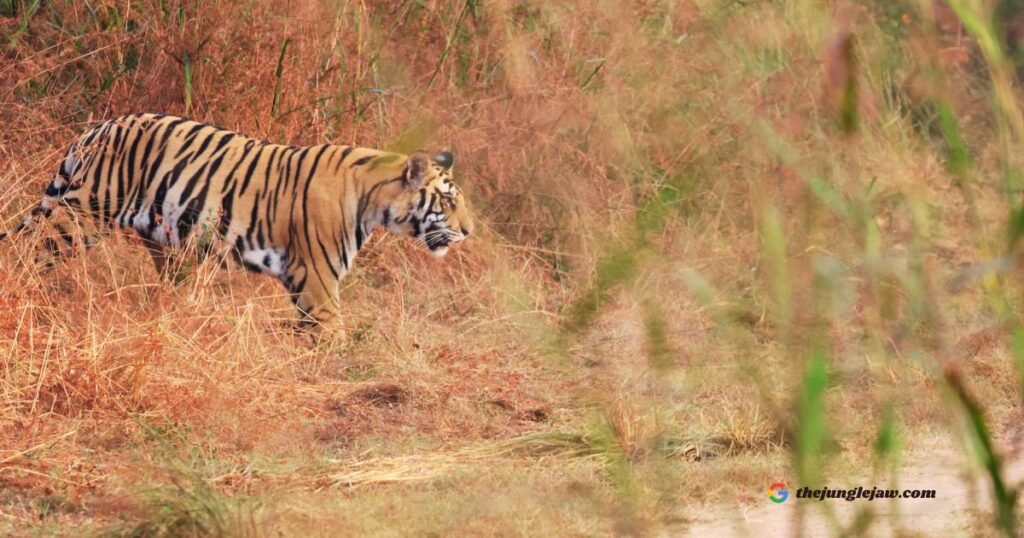
One of the most impressive features of the tiger is its coat, which provides perfect camouflage in its natural habitat. A tiger’s orange and black stripes allow it to blend into the dense forests and tall grasses, where it spends much of its time hunting. This camouflage not only helps tigers remain hidden from prey but also allows them to avoid detection from rival predators.
The tiger’s ability to move stealthily through its environment makes it an efficient predator. By staying hidden in plain sight, tigers can sneak up on their prey, getting close enough to deliver a deadly strike.
Learn more about tiger habitats and how their environment supports survival by visiting the World Wildlife Fund.

4. Exceptional Senses: Eyes, Ears, and Nose
Tigers are equipped with some of the sharpest senses in the animal kingdom, which are key to their survival. Let’s break down how each sense plays a role in the tiger’s ability to hunt and stay safe in the wild:
- Superior Night Vision: Tigers have exceptional night vision, allowing them to see in low-light conditions. This is especially important for hunting at dawn and dusk when their prey is most active.
- Sensitive Hearing: Tigers possess acute hearing, enabling them to detect even the faintest sounds in their environment. This helps them locate prey or avoid the approach of a rival animal.
- Heightened Sense of Smell: A tiger’s sense of smell is highly developed. It can detect scents from miles away, allowing it to track prey or recognize the presence of other animals in its territory.
5. Long Tail: Balance and Communication
The tiger’s long tail is not just for show; it’s a vital part of its physical design. When running at high speeds or making sharp turns, the tail helps the tiger maintain balance, ensuring it doesn’t lose control during a chase.
In addition to balance, the tail serves as a means of communication. Tigers use their tails to signal emotions, such as aggression or curiosity, to other tigers. This helps them interact socially, particularly when defending their territory or mating.
To learn more about animal communication, check out this National Geographic article on how animals communicate.
6. Large Lungs and Heart: Endurance for the Chase
While tigers are known for their explosive speed, they also rely on their stamina to outlast prey during long chases. Their large lungs and heart allow them to take in more oxygen, which is critical during extended hunting pursuits.
Tigers can maintain a steady pace over long distances, waiting for their prey to tire out. This endurance is essential, especially when hunting prey that is agile or attempts to escape through long flights.
7. Solitary Nature: How Its Body Helps It Survive Alone
Unlike lions, tigers are solitary animals. Their bodies are designed for independence. Tigers are territorial and rely on their strength, senses, and endurance to protect their space and hunt alone. Their large size and sharp claws make them capable of defending their territory from other tigers or predators.
Tigers mark their territory using scent markings and vocalizations, signaling to others that the area is already claimed. This solitary behavior allows them to avoid competition and focus on their survival without the need for a group.
Conclusion: Tiger Adaptations
The tiger’s body is a marvel of evolutionary design. From its powerful muscles to its acute senses, every feature is fine-tuned for survival in the wild. These magnificent creatures are apex predators, and their adaptations ensure they remain at the top of the food chain. But as wild populations decline, it’s important to remember the role that conservation plays in protecting these incredible animals. By supporting tiger conservation efforts, we can ensure that these apex predators continue to thrive in their natural habitats for generations to come.
Get involved with tiger conservation by supporting organizations like WWF’s Tiger Conservation.