
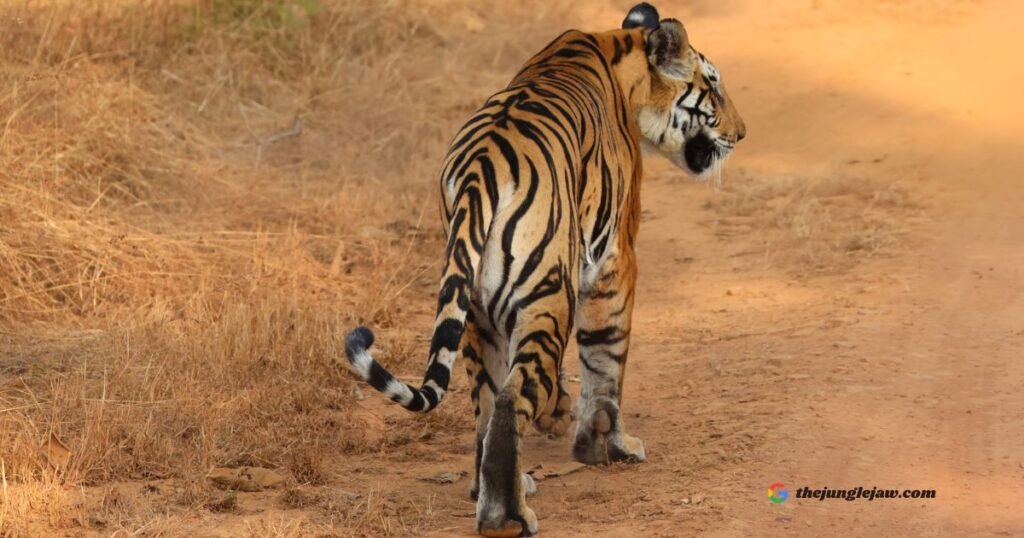
When you think of the Bengal tiger, the first thing that comes to mind is its bold orange coat and Indian Tiger Stripes. But those stripes are not just for looks — they are one of nature’s most brilliant survival tools. In the wild forests of India and across South Asia, Indian Tiger Stripes are a masterpiece of camouflage that help this top predator hunt, hide, and stay alive.
Table of Contents
A Pattern Unlike Any Other
Every Indian tiger wears a pattern as unique as a human fingerprint. No two tigers have the same stripe design — even white tigers and golden tigers carry their own distinct markings. These stripes come from pigmentation in the skin, not just the fur, meaning that even if a tiger’s hair were shaved, the pattern would still appear on its skin. (en.wikipedia.org)
Bengal Tiger Facts You Didn’t Know: 7 Surprising Truths About This Legendary Big Cat
More Than Just Beauty — A Hidden Advantage in the Wild
Look deeper at a tiger’s stripes and you’ll see why they work so well in nature:
- Breaks up the shape: In forests and tall grass, the vertical stripes blend with shadows, tree trunks, and shafts of sunlight. This makes the tiger’s body hard to see — even when it’s moving.
- Stealthy stalks: Tigers are ambush hunters. They rely on silence and surprise. Stripes help them slip through grass and bushes without being noticed.
- Closer talks with prey: The better the camouflage, the closer a tiger can get before launching its final burst of speed — sometimes from just a few meters away.
This design isn’t just pretty — it’s a life‑saving tool that has evolved over thousands of years to make the Indian tiger a top predator in grasslands, forests, and mangrove swamps throughout its range. (en.wikipedia.org)
Rare Color Variations Tell a Story
Some Bengal tigers carry unusual coat variations — the rare white tiger and even more unusual golden tiger. These color changes happen when rare genes alter the way pigment is expressed. While striking to look at, these variations may make camouflage less effective, which is one reason why most of these unusual colors are rarely seen in the wild and more often seen in captivity. (en.wikipedia.org)
- White tigers appear when both parents carry a special recessive gene.
- Golden tigers carry a different gene that gives them a pale gold coat with lighter stripes.
These unusual tigers are beautiful, but their different colours can make stealth hunting harder — a reminder that nature’s “normal” look isn’t just pretty: it’s adaptive.
The Science Behind the Indian Tiger Stripes
Scientists say that tiger stripes evolved over generations because they helped tigers survive and catch prey. In places like dense forests and tall grasslands, sharp shadows and irregular light patterns break up the tiger’s outline. This makes it nearly invisible to the sharp eyes of deer and other prey until it’s too late.
This camouflage is so good that even experienced trackers sometimes say they feel a tiger nearby before they see it.
Stripes and Survival — A Balance of Beauty and Function
When we admire the beauty of a Bengal tiger’s coat, we are also seeing one of evolution’s sleekest survival tools in action. Those stripes are not random patterns — they are finely tuned to make the tiger an expert hunter.
Next time you see a picture of a Bengal tiger, remember: those dark bands across bright fur are not just for show. They are nature’s perfect disguise — helping the tiger hide, hunt, and survive in the wild jungles of Asia.