
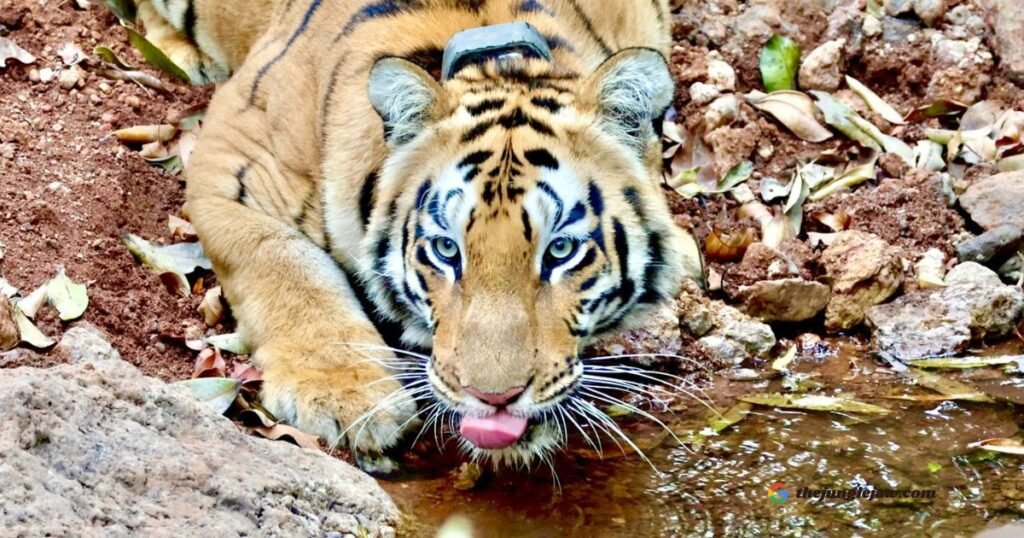
Imagine walking through the lush forests of the Western Ghats, where sunlight filters through dense trees, birds chirp, and suddenly, you hear the soft rustle of leaves. Somewhere out there, a majestic tigress named Chanda roams. She is not just any tiger — she is a symbol of hope, conservation, and the wild heart of Sahyadri Tiger Reserve (STR).
If you’re a wildlife lover, this is the story you’ve been waiting for. Let’s meet Chanda tigress and dive into her journey from Tadoba-Andhari Tiger Reserve to becoming The Queen of Sahyadri.
Table of Contents
Sahyadri Tiger Reserve: A Wildlife Paradise
Located in the Western Ghats of Maharashtra, STR is spread across Satara, Sangli, Kolhapur, and Ratnagiri districts. Covering 1,166 square kilometers, it is a hotspot of biodiversity.
Why STR matters:
- First tiger reserve in the northern Western Ghats
- Includes Chandoli National Park and Koyna Wildlife Sanctuary
- Home to 33 mammals, 244 birds, 44 reptiles, and hundreds of endemic plants
- Vital ecological corridor connecting tiger populations across Maharashtra
STR is not just a forest. It’s a living ecosystem where tigers, prey, and humans can coexist — if managed responsibly.
Chanda tigress (T-20-S-2) is a female tiger translocated from Tadoba-Andhari Tiger Reserve to Sahyadri Tiger Reserve in 2025.
- Traveled over 900 km in a specially fitted transport vehicle
- Underwent a soft-release in a pre-release enclosure
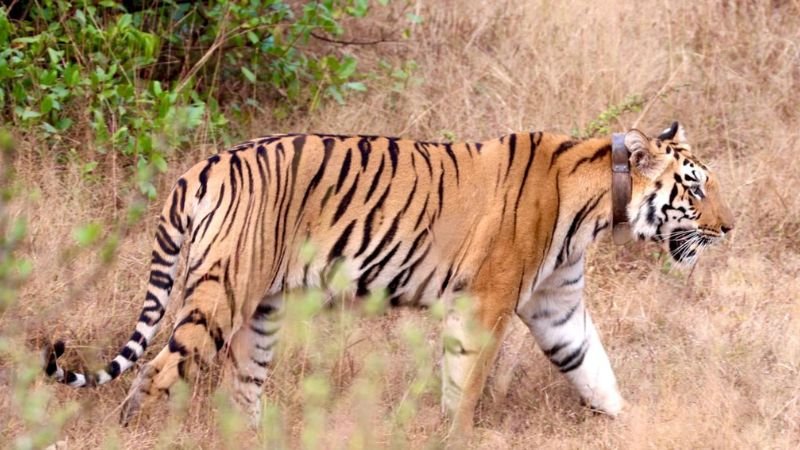
- Equipped with a radio collar for monitoring
- Known as “The Queen of Sahyadri” for her confident territorial marking
Chanda tigress is a prime example of scientific wildlife management — a tiger moving not just physically, but symbolically, to restore predator balance in STR.
Press Note: Chanda’s Release
Date: 20 November 2025
Issued by: Field Director, Sahyadri Tiger Reserve, Maharashtra
Tigress Successfully Released into Chandoli National Park
Tigress Successfully Released into Chandoli National Park After Scientific Acclimatisation Phase
In a major step towards strengthening the tiger population in the Sahyadri landscape, a female tiger (T-20-S-2), earlier soft-released inside a controlled enclosure, was successfully released today into the open forests of Chandoli National Park under the Sahyadri Tiger Reserve.
After arrival, the tigress underwent a carefully planned habituation, observation and acclimatisation phase in the pre-release enclosure, where her movement, behaviour, feeding pattern, response to natural elements, territorial marking, activity rhythm, prey interest and avoidance instincts were scientifically monitored. Expert veterinarians and wildlife biologists from the Wildlife Institute of India (WII) conducted daily behavioural assessments and declared her fit for full wild release. Enclosure has opened at 4.30 pm on 18th but she took her own time to come out and finally on 20 th around 8.15 am she came out most elegantly. She has started marking her territory from enclosure itself proving herself as The Queen of Sahyadri.
⸻
Scientific Monitoring & Post-Release Protocol
The tigress has been equipped with a radio collar and will be monitored round-the-clock using satellite-based telemetry and VHF antenna tracking units to ensure her safety and smooth integration into the wild ecosystem. Monitoring teams from Sahyadri Tiger Reserve, Chandoli National Park and WII are already deployed across strategic beats, vantage points, patrolling routes and water bodies.
Key monitoring components include:
• Satellite & VHF-based real-time location tracking
• Field patrol-based triangulation and direct sign verification
• Behavioural documentation (movement, resting sites, kill pattern, territory exploration)
• Conflict-avoidance protocols with local communities
• Veterinary response readiness
⸻
Field Director Tushar Chavan, IFS:
“The tigress has shown excellent adaptive behaviour, natural activity patterns and ecological responses inside the pre-release enclosure. She is perfectly fit, healthy and ready to thrive in the wilderness of Chandoli National Park. Our teams, supported by WII scientists, are fully prepared for responsible and scientific post-release monitoring. This marks an important milestone in the Sahyadri tiger recovery programme, which is being executed with highest conservation ethics and scientific precision.”.”
Chief Wildlife Warden M S Reddy, IFS:
“This initiative reflects Maharashtra’s scientific, systematic and long-term approach to wildlife conservation. The tigress has acclimatised well to the habitat conditions and demonstrated satisfactory wild behavioural traits. With expert teams from STR and WII in place for continuous monitoring, this release strengthens our efforts to re-establish a healthy and viable tiger population in the Sahyadri landscape.”
Why Chanda tigress Was Translocated
STR had very few tigers for decades. Camera traps first recorded a tiger after 8 years in 2018.
Operation TARA was initiated to:
- Increase genetic diversity
- Ensure long-term breeding success
- Restore tiger culture in the Western Ghats
- Support eco-tourism and local economy
Think of it as planting seeds in fertile forest soil. Chanda tigress is the seed of a renewed tiger population.
Complete Profile of Chanda tigress
| Aspect | Details |
| Name | Chanda tigress (T-20-S-2) |
| Gender | Female |
| Origin | Tadoba-Andhari Tiger Reserve |
| Translocation Date | Late 2025 |
| Current Reserve | Sahyadri Tiger Reserve, Chandoli National Park |
| Pre-release Phase | Soft-release enclosure for acclimatization |
| Release Date | 20 November 2025 |
| Behavioural Traits | Territorial marking, adaptive, healthy hunting instincts |
| Monitoring | Radio collar, satellite & VHF, field patrols |
| Significance | First tigress translocated to strengthen STR tiger population |
| Conservation Partners | STR, Chandoli NP, Wildlife Institute of India (WII) |
| Press Coverage | Times of India, Indian Express, Pune News Hub, Mid Day |
| Nickname | “The Queen of Sahyadri” |
Tigers Population in Sahyadri Tiger Reserve (2026)
| Name | Code | Gender | Origin | Status |
| Senapati | STR‑01 | Male | Native | Resident |
| Subedar | STR‑02 | Male | Native | Resident |
| Baji | STR‑03 | Male | Native | Resident |
| Chanda | STR‑04 | Female | Translocated | Settling |
| Tara | STR‑05 | Female | Translocated | Wild |
| Hirkani | STR‑06 | Female | Translocated | Wild |
| Shiledar | STR‑09 | Male | Resident | Camera-trapped |
💡 Tigers names are inspired by Maratha warrior titles, linking heritage with wildlife.
Wildlife & Ecosystem of STR
🌼 Flora
- 1,452 tree species
- 400+ medicinal plants
- Endemic species: Anjani, Jambhul
🦜 Fauna
| Category | Count |
| Mammals | 33 |
| Birds | 244 |
| Butterflies | 120 |
| Reptiles | 44 |
| Amphibians | 22 |
| Freshwater Fish | 50 |
STR also hosts gaur, leopards, sambar deer, hornbills, and more — a bustling wildlife city.
The Sahyadri Tiger Reserve officials works round the clock to protect and grow its tiger population. Forest staff patrol the forests, monitor tigers with cameras and collars, and ensure they stay safe. Every day and night, the reserve fights to keep tigers like Chanda thriving while preserving the forest and its wildlife.
Monitoring Chanda in the Wild
- Radio collars track her location continuously
- Camera traps observe behaviour and interactions
- Patrol teams check resting sites, kills, and territory markers
- Conflict avoidance with local communities
It’s like following a real-life documentary of a tiger’s life — unpredictable and fascinating.
FAQs About Chanda tigress
Q: Is Chanda tigress still in STR?
A: Yes, she is actively exploring and settling into Chandoli NP.
Q: Why was she moved here?
A: STR had low tiger numbers; Chanda boosts genetic diversity and breeding potential.
Q: How many tigers are in STR now?
A: At least 7 officially documented tigers, including Chanda.
Q: Can tourists see Chanda tigress?
A: She is wild and mostly elusive. Guided safari trails may offer sightings.
Conservation Lessons from Chanda
- Scientific Approach Works — Operation TARA shows planning is crucial
- Tigers Need Safe Habitats — Forest protection and corridors are essential
- Community Involvement Matters — Local support ensures long-term success
- Monitoring is Key — Helps prevent human-tiger conflicts and ensures safety
Conclusion
The story of Chanda Tiger is more than a tiger tale — it’s a modern wildlife revival saga.
- STR now has a stronger tiger population
- Science and ethics guide her release and monitoring
- Chanda symbolizes hope, survival, and coexistence
Visit STR at dawn, and you might just feel the pulse of the forest that Chanda now rules.
Hi, this is a comment.
To get started with moderating, editing, and deleting comments, please visit the Comments screen in the dashboard.
Commenter avatars come from Gravatar.