
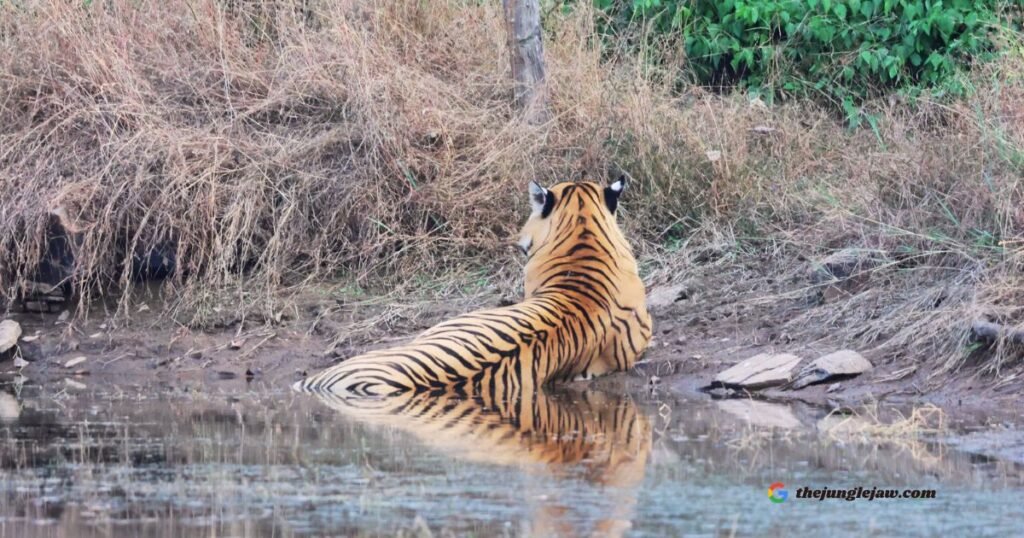
The Indian tiger — often called the Bengal tiger (Panthera tigris tigris) — is one of the most awe‑inspiring carnivores on Earth. Not just a cultural icon and India’s national animal, this big cat plays a critical role in maintaining the balance of the ecosystem. In this blog, we’ll explore day in the Life of a Bengal Tiger — from territory patrols to its deadly hunting techniques, feeding habits, survival challenges, and conservation triumphs.
Table of Contents
Habitat & Territory: Where the Indian Tiger Lives
The Bengal tiger’s range spans across India, Bangladesh, Nepal, and Bhutan. They occupy diverse environments including tropical forests, grasslands, wetlands, and even mangrove swamps like the famous Sundarbans.
Tigers are territorial and solitary, meaning each adult male or female keeps a large zone to itself — marking it with scent, scratches, and roaring to warn others.
Early Morning Rituals: Patrol & Scent Marking
In the cool hours of dawn, a tiger often begins its day by:
✔ Checking its territory boundaries
✔ Reinforcing scent marks with urine and gland secretions
✔ Listening intently for prey or rival tigers
This time is crucial because the tiger’s keen senses — especially smell and hearing — are at their peak in low light.
Why the Indian Tiger Stripes Are More Than Just Beautiful — The Secret to Their Camouflage Power
Hunting: Predator Strategy and Technique
🐾 Solitary Ambush Hunting
Unlike wolves or lions, the Bengal tiger hunts alone. Its hunting style depends on stealth, patience, and enormous strength:
- Stalk quietly — moving slowly through vegetation without alerting prey.
- Close the distance — silently approach within 20–30 meters.
- Swift attack — a burst of power to seize the prey’s throat and deliver a fatal bite.
🐐 Prey Choices
The tiger primarily hunts large hoofed animals (ungulates) including:
- Deer species, like chital and sambar
- Wild boar and nilgai
- Gaur and buffalo calves in some areas
A single kill can yield up to 40 kg (88 lbs) of meat, which it may eat over several days.
💡 Fun Fact: Tigers can be successful in only about 1 in every 20 hunt attempts — meaning strategy and patience are everything
Midday: Rest and Energy Conservation
After bringing down prey, the tiger often spends the hot midday hours resting in shaded grass or near waterholes. This helps it conserve energy and digest its food. Adult tigers may sleep for long stretches, warming up only when temperatures cool.
Evening Activity: Preparing for the Night
As dusk falls, the tiger becomes more alert and mobile; many hunts happen at night, when the tiger’s excellent night vision and camouflage give it an upper hand.
Tigers may traverse many kilometers while tracking prey, patrolling edges, or exploring different parts of their territory.
Diet & Feeding Patterns
The Indian tiger is a carnivore — a predator at the top of the food chain. Its diet influences its daily life significantly:
✔ Eats mostly large mammals
✔ Can consume 20–60 lbs of meat at once
✔ Stores excess food by dragging carcasses into hidden spots
Survival Strategies
The tiger’s survival depends on multiple adaptations:
✨ Camouflage — Unique stripes help break its outline in dense vegetation.
✨ Strong swimmers — Tigers love water and swim to cool off or hunt.
✨ Acute senses — Excellent hearing and sight aid in detecting prey.
However, tigers face serious threats including habitat loss, fragmentation, and human conflict — the biggest barriers to survival today.
Conservation: The Fight to Save Bengal Tigers
Thanks to Project Tiger and strengthened conservation efforts, India now hosts over 75% of the world’s wild tiger population across more than 50 tiger reserves.
Recent news highlights positive developments too — such as rising numbers in reserves like Sariska and even lone tigers returning to regions like Gujarat.
Conclusion: A Day in the Life of a Bengal Tiger
From dawn patrols to deadly hunts and long rests, the Indian tiger’s daily life is a tapestry of strategy, patience, and raw instinct. As one of nature’s most majestic predators, it continues to inspire awe and deserves our protection.
Are you a wildlife lover or educator? Share this article, help spread awareness, or support reputable conservation organizations working to ensure the tiger survives for generations to come.