
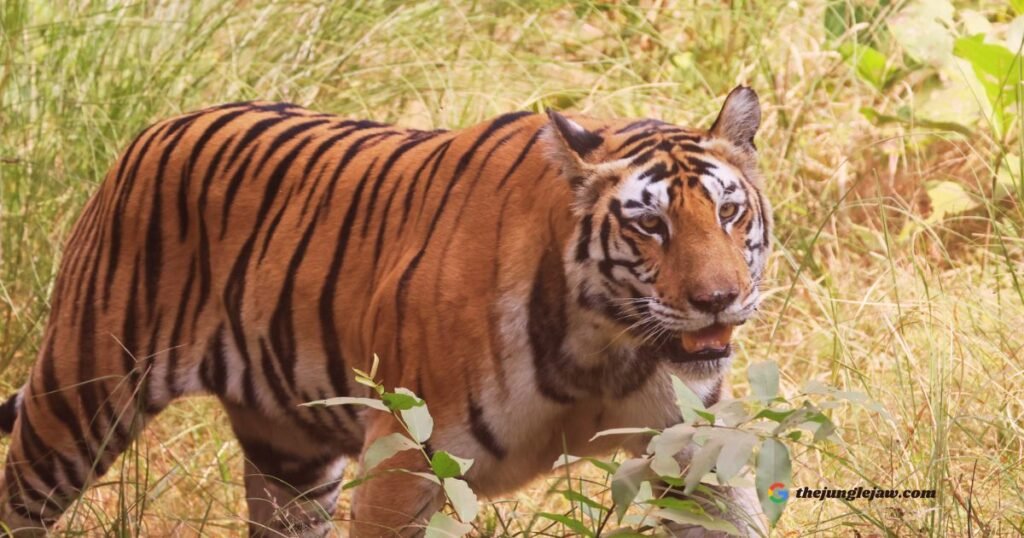
There are few animals on Earth that stir the imagination like the Bengal tiger. With its striking orange coat and bold black stripes, this big cat is one of the most recognized and respected predators in the wild. Most people know that Bengal tigers are powerful and beautiful, but there is much more beneath the surface. Venture into the forests and grasslands of India, and you’ll discover Bengal tiger facts that surprise even seasoned wildlife lovers.
Table of Contents
Here are 7 fascinating Bengal tiger facts you may not have heard before — facts that show just how remarkable this animal truly is.
1. Bengal Tigers Are the Largest Tigers on Earth
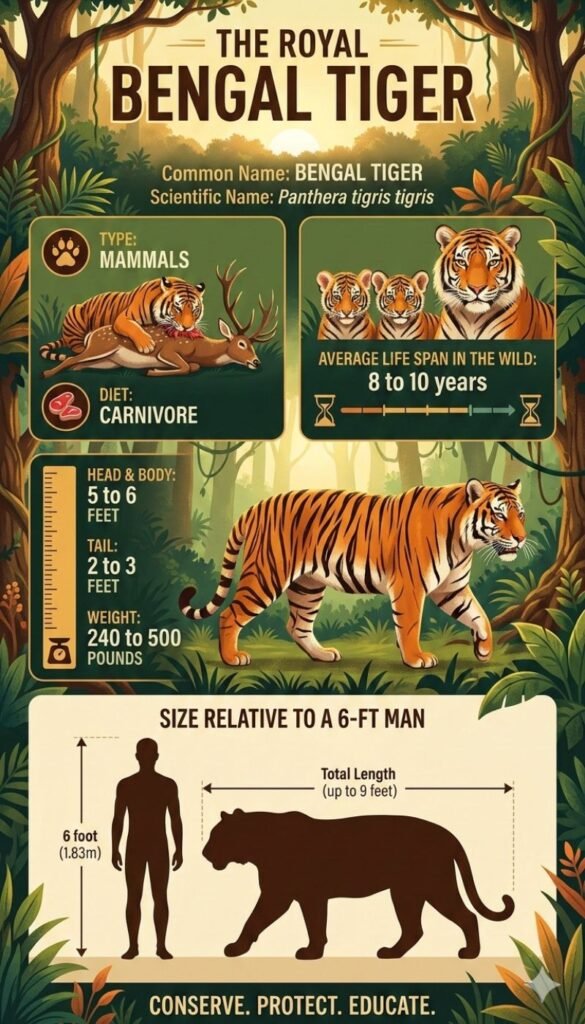
When an adult male Bengal tiger steps out of the forest, its size is breathtaking. These big cats can reach up to 10 feet in length from nose to tail, with the head and body alone measuring 5 to 6 feet. A fully grown male can weigh as much as 500 pounds, making it the largest tiger subspecies in the world.
But size isn’t just for show. Their massive build helps them hunt large animals and survive in a world where strength can mean life or death.
2. Every Tiger Has Its Own Unique Stripes
Look closely and you’ll notice — no two Bengal tigers have the same stripe pattern. Just like human fingerprints, these stripes are one-of-a-kind identifiers.
But the stripes do more than dazzle the eye. They act as camouflage, breaking up the tiger’s outline among trees, shadows, and tall grass. In the dense forests where they hunt, these stripes are invisible magic.
Why the Bengal Tiger is So Amazing: 5 Reasons We Can’t Stop Admiring This Iconic Animal
3. These Tigers Love Water — and Are Strong Swimmers
Most big cats avoid water, but not Bengals.
Bengal tigers are excellent swimmers. They are often seen wading through rivers and lakes in search of prey or to cool off in the heat. In places like the Sundarbans mangrove forests, a tiger may swim long distances as part of daily life.
It’s a reminder that the “king of the jungle” does not fear the water — it rules there, too.
4. Their Roar Is Loud Enough to Travel for Miles
In the early morning or late evening, the forest can be eerily quiet — until a roar cuts through the stillness.
A Bengal tiger’s roar can carry for up to 3 miles through thick jungle. This mouth‑shaking sound is how tigers communicate across territories, warn rivals, and locate mates. To hear a tiger roar in the wild is to feel the jungle come alive.
5. They Live Alone — Kings of Their Own Kingdoms
Unlike lions, which live in groups called prides, Bengal tigers are solitary animals.
Each tiger patrols its own territory — marking trees, scent trails, and scratch marks on the ground to warn others. Only mothers with cubs or mating pairs spend time together. For most of their lives, these big cats walk the wild alone, masters of their own domain.
6. Their Diet Is Big — But Flexible
Bengal tigers are top carnivores, and they prefer large prey such as:
- Deer (sambar, chital)
- Wild boar
- Buffalo
- Gaur
However, they are also opportunistic hunters. Smaller mammals, birds, and even fish can become part of a tiger’s meal when larger prey is scarce. Sometimes, they will carry or hide extra kills for later — a smart survival strategy in the unpredictable wild.
7. Bengal Tigers Are Still in Danger
Despite their power and beauty, Bengal tigers are endangered. There are only about 2,500 left in the wild today.
Their biggest threats are:
- Loss of habitat due to forests being cleared
- Poaching for tiger parts
- Human‑wildlife conflict
Conservation efforts — like Project Tiger in India — have helped protect tiger strongholds and increase awareness. Still, every tiger needs safe forests to roam. Without continued protection, this legendary big cat could slip from the wild forever.
Why These Bengal Tiger Facts Matter
The Bengal tiger is not just a beautiful animal — it is a living story of survival, strength, and the delicate balance of nature. These surprising truths remind us that this species is far more complex and unique than most of us realize.
By understanding the tiger’s world, we honor its place in the wild and in our hearts.
Join the Movement to Save Bengal Tigers
You can help protect these majestic animals. Support wildlife conservation organizations, spread awareness, and learn more about how local communities coexist with tigers. Every step, big or small, makes a difference.